Should You Foam Roll Before or After Your Workout? The Timing Actually Matters
Quick Answer: Foam rolling before training briefly increases range of motion without meaningfully reducing strength — good as a warm-up tool. Foam rolling after training targets soreness and recovery. Doing both, for different reasons, is supported by the research; skipping one isn’t a mistake either.
Foam rolling gets treated as a single generic “good for you” activity, but timing changes what it actually does. Before and after aren’t interchangeable — they’re solving two different problems.

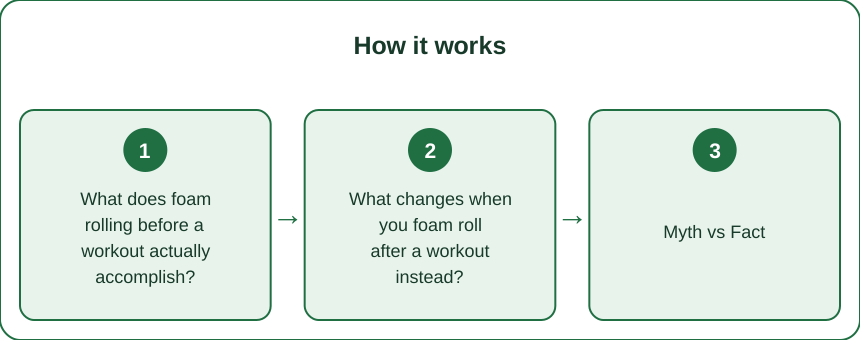
What does foam rolling before a workout actually accomplish?
Pre-workout foam rolling produces a short-term increase in range of motion and reduced muscle stiffness, lasting roughly 10-20 minutes — long enough to carry into your warm-up and main sets.
Importantly, unlike static stretching held too long before lifting (which can temporarily reduce power output), foam rolling doesn’t show the same strength-dampening effect in most studies — making it a safer pre-workout mobility tool than long static holds.
What changes when you foam roll after a workout instead?
Post-workout rolling targets perceived soreness and recovery comfort rather than performance. Studies on delayed-onset muscle soreness (DOMS) show foam rolling after training can meaningfully reduce next-day soreness ratings, likely through a combination of increased blood flow and a neurological pain-gating effect.
It doesn’t appear to speed actual muscle tissue repair at the cellular level — the benefit is comfort and perceived recovery, which still has real value for consistency and mood around training.

Myth vs Fact: Foam Rolling Timing
Myth: Foam rolling breaks up muscle knots and adhesions. Fact: The mechanical pressure isn’t strong enough to physically alter fascia tissue structure — the benefit is more likely neurological (reduced tension signaling), not physical breakdown of “knots.”
Myth: You should foam roll for 5+ minutes per muscle group. Fact: Most studies showing benefit use 30-60 seconds per muscle group — longer durations haven’t shown proportionally greater benefit.
Myth: Foam rolling before lifting will make you weaker, like static stretching can. Fact: This is one of the more consistent findings distinguishing foam rolling from long static holds — foam rolling doesn’t show the same acute strength reduction.
Is there a wrong way to time foam rolling that reduces its benefit?
The main mistake is using pre-workout duration and intensity meant for recovery — spending 10 minutes aggressively rolling a muscle group right before you need it to perform can create unnecessary fatigue or discomfort heading into your working sets.
Keep pre-workout rolling brief (30-60 seconds per area) and save longer, more thorough sessions for after training or on rest days when performance isn’t on the line.
FAQ: Foam Rolling Timing Questions, Answered
Can foam rolling replace a dynamic warm-up?
No — it pairs well as a first step before dynamic movement, but doesn’t raise heart rate or rehearse movement patterns the way dynamic warm-ups do. Use both, in that order.
Is it bad to foam roll every single day?
Not inherently, as long as you’re not rolling directly over acute injuries or excessive bruising. Daily light rolling (especially post-workout) is common in athlete recovery routines without documented downsides.
Should beginners foam roll differently than experienced athletes?
Beginners often benefit from gentler pressure and shorter durations initially — 20-30 seconds per area is a reasonable starting point before working up to standard protocols.
TL;DR:
- Before training: brief rolling (30-60s) modestly boosts range of motion without hurting strength
- After training: rolling reduces perceived next-day soreness through comfort/neurological effects, not tissue repair
- Longer isn’t better — most benefit shows up within the first minute per muscle group
- Save longer, more thorough sessions for post-workout or rest days, not right before lifting
Pick the timing based on what you’re solving for — mobility now, or comfort later — and you can’t really do it wrong.
Keep Reading
This article is for general informational purposes only and is not medical advice. Always consult a qualified health professional for guidance specific to you.