Why Foam Rolling Hurts Way More in Some Spots Than Others (And What That Means)
Rolling out the same general muscle group can feel mild in most areas and then suddenly sharp and tender in one specific spot, and that uneven pain pattern isn’t random, it usually points to something specific happening in that exact tissue.

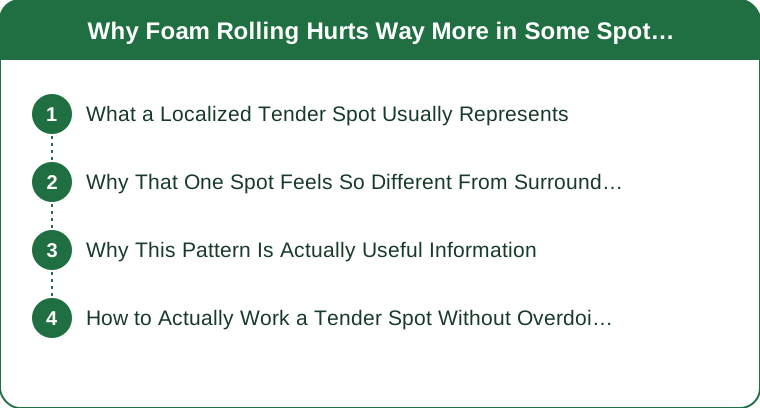
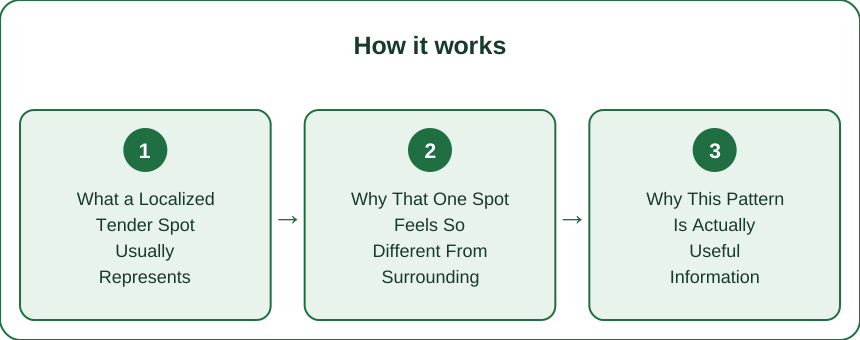
What a Localized Tender Spot Usually Represents
The likely explanation: a sharply more painful, localized spot under the roller commonly corresponding to a trigger point, a small area of persistently contracted muscle fiber that stays tense even when the surrounding muscle is relaxed.
Why That One Spot Feels So Different From Surrounding Tissue
The mechanism: a trigger point’s contracted fibers restricting local blood flow and building up metabolic waste products in a way the relaxed surrounding tissue doesn’t, which is a large part of why pressure there specifically feels sharp rather than the duller general pressure felt elsewhere.

Why This Pattern Is Actually Useful Information
The diagnostic value: the specific location of tender spots often correlating with areas under repeated postural strain or overuse, meaning the pain map itself can point toward an underlying movement or posture pattern worth addressing beyond just rolling it out.
How to Actually Work a Tender Spot Without Overdoing It
The practical technique: holding steady, sustained pressure on a tender spot for twenty to thirty seconds rather than rolling back and forth repeatedly over it, since sustained pressure allows the contracted fibers time to release in a way that repeated rolling motion doesn’t, and the frame (a sharply tender spot under the foam roller usually marks a trigger point of contracted muscle fiber with restricted blood flow — holding steady pressure there, not rolling back and forth over it, is what actually helps it release.)
Rolling out the same general muscle group can feel mild in most areas and then suddenly sharp and tender in one specific spot, and that spot commonly corresponds to a trigger point, a small area of persistently contracted muscle fiber that stays tense even when the surrounding muscle is relaxed. A trigger point’s contracted fibers restrict local blood flow and build up metabolic waste products in a way the relaxed surrounding tissue doesn’t, which is a large part of why pressure there specifically feels sharp rather than the duller general pressure felt elsewhere, and the specific location of these tender spots often correlates with areas under repeated postural strain or overuse, meaning the pain map itself can point toward an underlying movement pattern worth addressing beyond just rolling it out. Holding steady, sustained pressure on a tender spot for twenty to thirty seconds, rather than rolling back and forth repeatedly over it, allows the contracted fibers time to actually release in a way that repeated rolling motion doesn’t.
Keep Reading
This article is for general informational purposes only and is not medical advice. Always consult a qualified health professional for guidance specific to you.