Rolling Before vs After Workouts: What Goes Where and Why
The foam roller sits in both camps — the warm-up corner and the cool-down corner — and it does different jobs in each: pre-workout rolling preps, post-workout rolling calms, and neither does what the marketing claims. The placement guide.

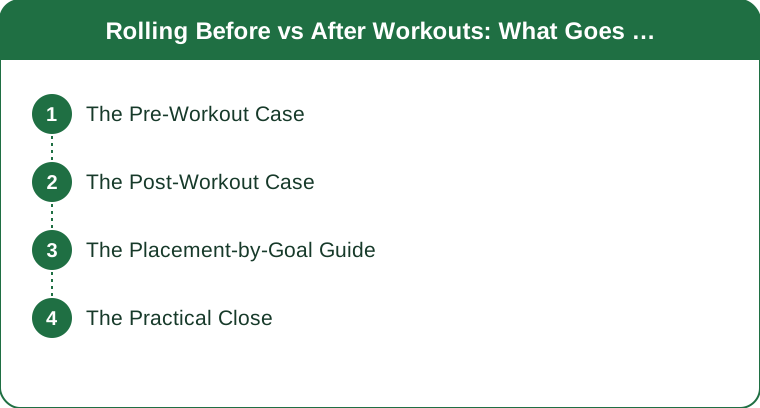
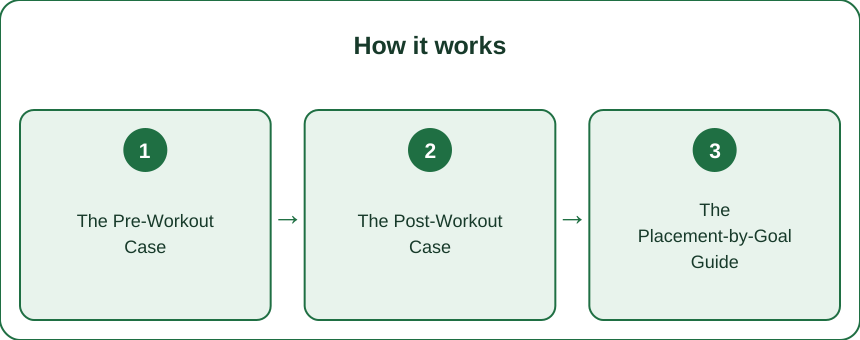
The Pre-Workout Case
Rolling as preparation: the acute effects (the short-term range-of-motion increase WITHOUT the strength loss that static stretching causes — the rolling’s warm-up advantage from the warm-up doctrine; the effect lasting minutes, which is exactly long enough), the mechanism honesty (the neurological tolerance change more than tissue change — the ‘breaking up adhesions’ story retired per the rolling doctrine; the nervous system persuaded, not the fascia remodeled), the protocol (the 30-60 seconds per target area — the day’s workout dictating targets: the quads-and-glutes before squats, the lats-and-thoracic before overhead work per the session doctrine), the placement in the warm-up (the rolling FIRST, then dynamic movement — the roll-then-activate sequence; the rolling never replacing the movement prep per the warm-up doctrine), and the time honesty (the three-five minutes total — the twenty-minute pre-workout rolling session stealing training time for marginal gain per the time-budget doctrine).
The Post-Workout Case
Rolling as recovery: the soreness evidence (the post-exercise rolling showing modest DOMS reduction in studies — the next-day soreness taken down a notch; the real-but-small effect per the recovery doctrine), the calm-down function (the slow rolling as the parasympathetic downshift — the nervous-system exhale after intensity; the cool-down role from the evening doctrine), the protocol difference (the SLOWER, longer passes post-workout — the 60-90 seconds per area at lower urgency; the wince-pressure counterproductive both times per the pressure doctrine), the timing flexibility (the post-workout window being generous — the evening rolling hours later counting fully per the timing doctrine; the rolling-while-TV placement from the habit doctrine), and the alternative honesty (the walk, the sleep and the protein out-earning the roller for recovery — the rolling as the pleasant garnish per the recovery-hierarchy doctrine; the roller chosen because it feels good, which is a legitimate reason).

The Placement-by-Goal Guide
The decision matrix: the mobility-limited lifter (the pre-workout rolling on the restriction — the squat-blocked ankles-and-quads from the mobility doctrine; the roll-then-stretch-then-lift sequence), the soreness-prone beginner (the post-workout gentle passes — the DOMS-heavy weeks from the DOMS doctrine; the recovery-day rolling as the between-sessions option), the desk-worker double (the pre-workout thoracic rolling from the posture doctrine — the workout unlocked from the desk’s shape), the time-crunched honesty (the rolling CUT first when minutes are short — the training and the walk outranking it per the priority doctrine; the essentialism applied), the both-camps answer (the serious trainee rolling briefly both ends — the three-minute prep and the five-minute wind-down; the ten weekly minutes total), and the never-required note (the excellent training life possible without ever rolling — the roller being optional equipment per the honest doctrine; the tool used for the jobs it does, not the ones it’s sold for).
The Practical Close
Making it useful: the target library (the quads, glutes, calves, lats and thoracic being the high-value zones — the IT-band-direct and lower-back cautions from the rolling doctrine; the neck left alone), the pressure calibration (the comfortable-discomfort ceiling — the bruising sessions building nothing per the pressure doctrine), the tool matching (the smooth roller for general work, the ball for spots from the trigger-point doctrine — the textured-roller marketing resisted), the pairing wisdom (the roll-then-move law — the rolling followed by the range it opened being USED; the mobility work from the mobility doctrine cashing the roller’s check), the consistency framing (the brief regular rolling beating the occasional deep-dig — the habit placement per the habit doctrine), and the closing verdict (the roller as a modest, pleasant, two-job tool — the warm-up assistant and the cool-down comfort; the placement decided by the job; the marketing claims left in the box; the rolling, right-sized and usefully placed). Brief and brisk before, slow and calm after, never required: the roller, placed by purpose.
Pre-workout: 30-60 brisk seconds per target for range-of-motion without strength loss, then dynamic prep. Post-workout: slower 60-90 second passes for modest soreness relief and nervous-system calm. Cut rolling first when time is short — sleep, walks and protein out-earn it.
Keep Reading
This article is for general informational purposes only and is not medical advice. Always consult a qualified health professional for guidance specific to you.